Lakes Area Buzz
Latest News
|Lakes Area Buzz
Latest News

Subscribe

Addressing the Dental Care Crisis in Rural Minnesota

|

Lakes Area Buzz

Archives

Addressing the Dental Care Crisis in Rural Minnesota

SIGN UP FOR OUR NEWSLETTER

Addressing the Dental Care Crisis in Rural Minnesota

Innovative Solutions Bring Relief to Underserved Communities

EXCLUSIVE
🔥 Trending

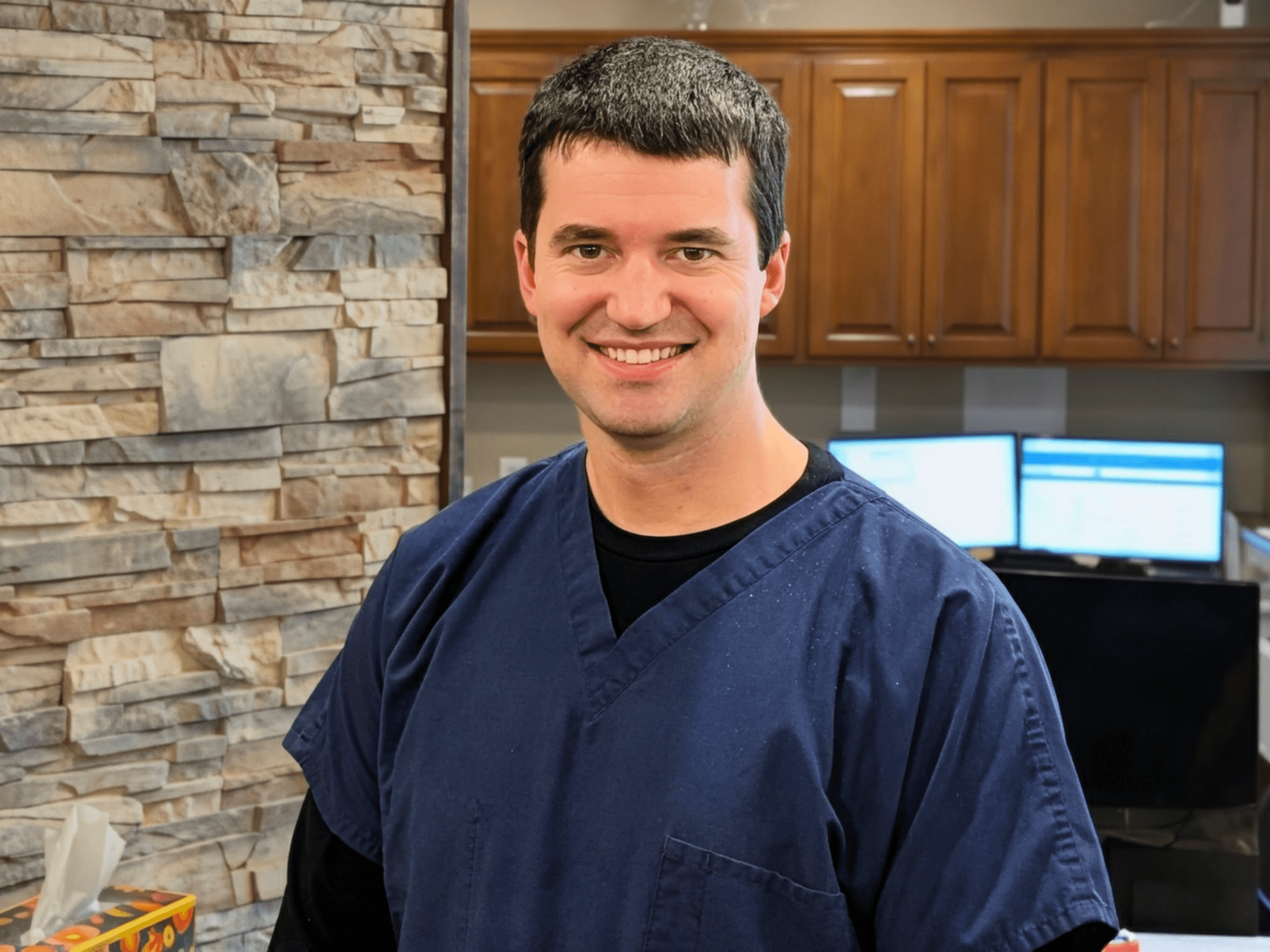
Dr. Chris Dens is having a regular morning at his dental office in Baxter when his phone rings. On the other end is a parent calling from two and a half hours away, and they’re pretty desperate. Their six-year-old’s got an infected tooth that hurts like the dickens, and they can’t find a single dentist willing to see the kid. The wait? Three to four months out, if they can find anyone at all. And here’s the kicker—the state’s paying for all of it. Insurance isn’t the problem. Finding a dentist is.


“You get all these kids that the dentistry is 100% covered. It’s all free. No out-of-pocket cost,” Chris explained. “Okay, if everything’s free, what percentage of those kids do you think has seen a dentist in the last year?” When he first dug into the numbers a few years back, the figure was closer to 30%. Today, with more programs in place, it’s finally climbed to about 50% of Minnesota kids on state insurance getting at least one preventive visit in a year—but that still means half are going without.


This isn’t just a Brainerd Lakes problem, either. It’s happening all across rural Minnesota, where families are driving long distances, burning gas and vacation days, just to get a kid out of pain.

Three Generations Doing It Right

The Dens family’s been taking care of teeth around these lakes for three generations now. It started with Chris’s grandpa Tom, then his dad Kevin, and now Chris himself. But Chris hit a wall his dad and grandpa never quite had to face: a system that’s basically broken for the kids who need help the most.


“So, you quietly launch programs that bring dental care directly into schools. What made you realize access—not awareness—was the real problem?” Chris was asked in our interview.


“Patients told me,” he said simply. He listened. Parents were driving hours to get emergency work done. He’s had “people drive to my office from two and a half hours away to have a tooth pulled for a six year old because they can’t find anywhere to go that’s closer or can get them in within three to four months for an emergency tooth extraction,” he said. “It’s absolutely ridiculous that kids should have to suffer that much because they have the wrong insurance. It just blows my mind and pisses me off.”


Once he saw that up close, he started digging into the data for Minnesota’s public health programs. The care was technically “free,” but kids still weren’t getting in, because there weren’t enough providers willing or able to see them.


Chris was already “very busy, like taking over the practice from Dad,” he said. “I didn’t have a ton of extra clinical time to see lots of extra people.” But he knew there had to be a smarter way. “If we can start and do the preventive things before the pain and the abscesses come, that’s the best return on time, value, money and taxpayer dollars and all this stuff,” he said.

Starting Small, Growing Big

The solution started small back in Brainerd. Chris’s wife Mandy is an elementary teacher and taught at Garfield Elementary. The principal, Joe Kennedy, lived just a couple doors down from them. They got to talking about the kids who were falling through the cracks.


“We said, ‘Hey, we think this would be a great thing. Can we send our hygienists into your school to go help some of the kids that are on state health care insurance and don’t have access to dental care?’” Chris recalled.


From that one conversation, one school turned into a whole network. That early model grew into a school-based program now reaching more than 170 schools around Minnesota, donating roughly a half million dollars in dental care to kids in need in a single year. “Now we have over 170 schools we’re going to go to this year and hopefully we’ll donate about a half million dollars of dental care to kids in need just this year,” he said.


The playbook itself wasn’t invented from scratch. Chris and his team used an existing Minnesota Department of Health model that allowed hygienists to go into schools and do simple, preventive work—cleanings, sealants, screenings—without a dentist on site, as long as there was a collaborative agreement in place. “You didn’t have to have a dentist on site because it’s all simple standard routine prevention only,” he said. “And that was something we found that had a good template from Minnesota Health as a model of how to implement it. It just hadn’t really reached greater Minnesota.”


“This year we were able to offer every school in the state an opportunity to have a school seal program at their school,” he noted. “The amount of lives we’ve been able to impact because we’ve got this network of hygienists and oral health professionals that are willing to give of their time on their days off to go see the kids and go travel, it’s cool.”

Treating People Like You’d Want to Be Treated

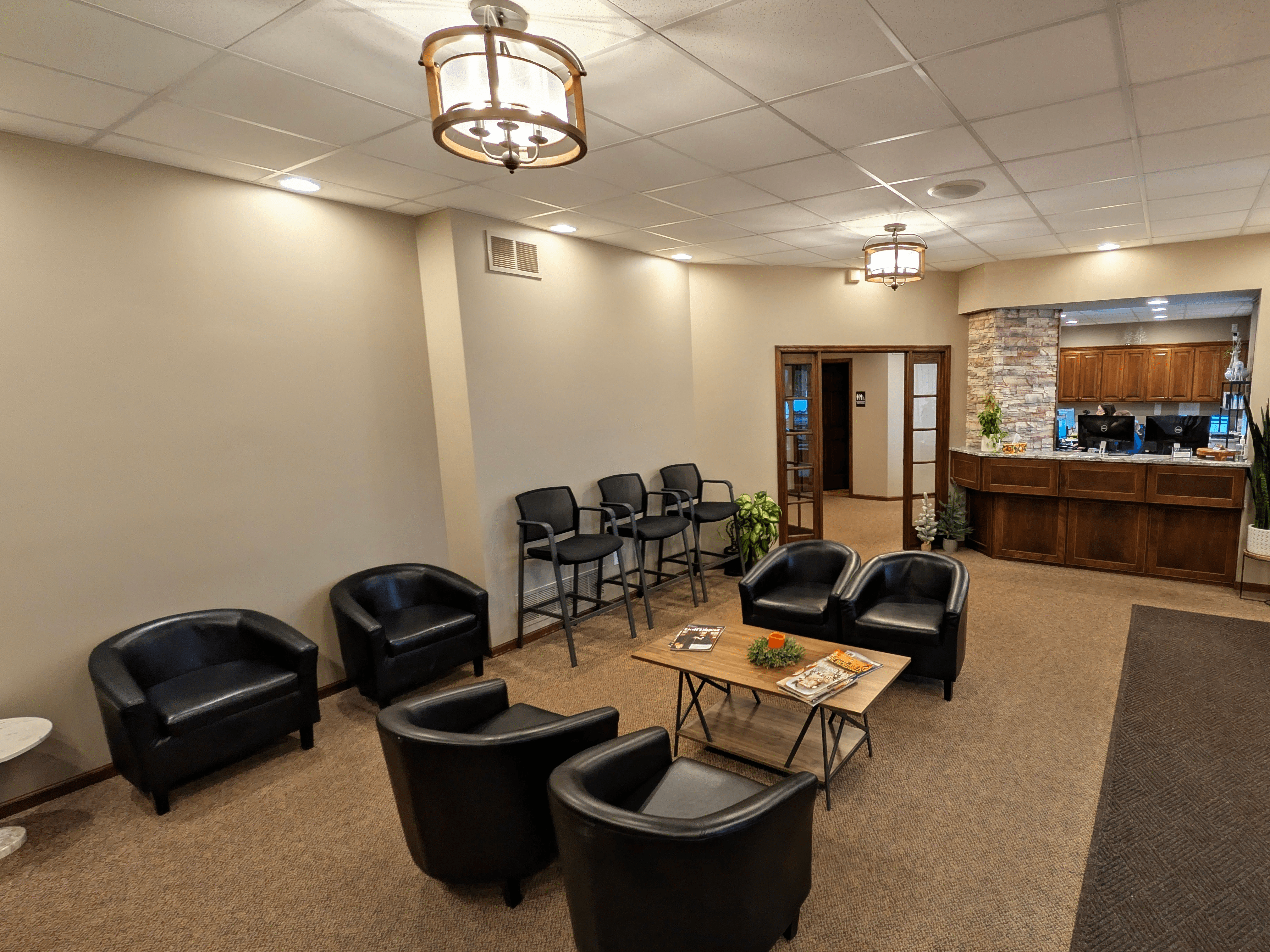
Walk into Cosmetic & Family Dentistry in Baxter and the staff doesn't treat you like some number in a queue. They know your name, they walk you around, they check in on you—the whole crew makes you feel like you're sitting at their kitchen table, not some corporate waiting room. That's the difference between a family practice and those big chains.


According to Chris, that culture is “very intentional.” “When we go through our team meetings and kind of our clinical calibrations or just philosophies, the way we practice here at the office comes back to the same good old fashioned core of helping people and trying to improve their lives,” he said.


They’ve even got a simple test: “We talk a lot about, you know, give recommendations for people that if it was your mother in your chair, if it was your sister or your brother in the chair, I’d be doing the exact same thing,” Chris said. “I’d be recommending the exact same things… we want to treat patients like family.”


When someone comes in with a lot going on, the team doesn’t just start rattling off procedures. “We do a lot more listening than we do talking,” he said. “I usually tell patients, okay, I’m gonna have you describe for me what your goals and objectives are. Where do you want to go? What matters to you?”


Then he levels with them. “I’m gonna take a look and say, okay, here’s where you’re at. Here’s your starting point,” he said. “Now I’m gonna be straightforward, upfront, and honest. I’m not gonna sugarcoat. I’m just gonna tell you like it is. The one thing I ask in return is please don’t shoot the messenger. We don’t cause this stuff, but we’re here to meet you where you’re at and not have any judgments, but meet you where you’re at and help you move forward with things.”


From there, he lays out options—A, B, and C—with pros, cons, risks, benefits, and costs, and helps people pick what fits best given their medical and financial realities. “At the end of the day, it’s the patient’s choice, the patient’s mouth, it’s their wishes,” he said.

“Conservative Dentistry” in His Own Words

Chris uses the phrase “conservative dentistry,” but he doesn’t mean cutting corners. He means right-sizing the work to the person.


Asked where that philosophy came from, he didn’t hesitate. “That came from patients,” he said. “Because as I go through practicing dentistry, it became very apparent very early on that what people wanted is now what I tell them I do: I want to perform for people the simplest, least invasive, and the least expensive route while there’s a reasonable chance of success to keep their teeth healthy and to keep their quality of life high. That summarizes it in a nutshell.”


He’s also seen what happens when treatment goes too far or gets sold to people who don’t really need it. “I never want to sell dentistry. I never want to push things on people they don’t need,” he said. “I’ve seen people that have done things and then regretted it later… being able to share that collective knowledge of foresight and shared wisdom from the community helps people end up in a better space long term where they’re going to be happy with themselves.”


That’s a big reason why he’s skeptical of profit-first models. “In dentistry, you need to pay the bills, you need to make money,” he said. “But in a family-run, for-the-patients practice, if you take good care and do the right things for people, the money should follow. After the corporate dentistry, the money comes first and then you maybe also sometimes get to do good for people.”

The Water Skier in Scrubs

There are two versions of Chris people know. One is the dentist in scrubs. The other is the guy on the lake, on 11-foot water ski stilts, breaking a world record.


Asked if those two versions ever collide, he laughed. “They do when I do pediatric dentistry,” he said. He’s got “a special place in my heart for kids,” and he tells parents up front that “pediatric dentistry is more of a theatrical performance than anything else.” The goal is to “guide the kids through a positive experience” and “get them through what they need to get through to get them healthy,” whether that’s “put this, you know, steel crown on or take a tooth out or just get them numb.”


“We have a lot of fun. We get really silly. We make it exciting and fun for the kids,” he said. “For dentistry, it can sometimes be a scarier and adverse experience for them. And if you get your show costume on, then everybody wins for doing kids and dentistry together.”


On the water ski side, he downplays the danger. “I would say that’s still precision,” he said. “It wasn’t really that risky of a thing… worst case you’re falling into the water from 11 feet tall. People jump off diving boards that are way the heck taller than that.”


Those worlds don’t overlap much, but they do share one thing. “The thing they have in common is making people smile,” Chris said. “I get to do that through teeth, I get to do that through the water skiing shows, inspiring other people.”

Video Credit: Lakeland PBS

Faith, Humility, and Why People Matter

Chris doesn’t typically lead with religion or politics in the chair. “I tend to, I don’t usually talk about religion with people. I don’t usually talk about politics with people, I’m here to just help you out, wherever you come from,” he said. “I care about you because you’re a human being and you’re worthy of care. In and of yourself, you just have… an innate value that you are worthy of respect and help and dignity.”


But when talking about what shaped his approach to service, he doesn’t dodge it either. “I would say three places,” he explained. “A little bit of it’s inborn, a little bit of it’s through example of family and friends, and then there’s also Jesus.”


“It’s hard to leave out Jesus when you’re like, ‘Here’s the greatest example of a man who served others, cured the sick, didn’t toot his own horn, and cared a heck of a lot about humanity,’” he said. “The servant leadership style has always spoken to me because it’s always felt right.”

Building a Team That Feels Like Home

As the practice has grown from a single-doctor shop into a multi-provider team, Chris has leaned hard into teamwork and systems that still feel personal.


He likes a story from Atul Gawande about pilots and the B-52 bomber—how complex systems require checklists and strong teams instead of lone heroes. That’s how he thinks about dentistry now. “As we grew from just, you know, a one doctor practice to a teamwork mentality, that concept of enabling and empowering and teaching others to become the best versions of themselves and to work as a team has really become the focus of how we’ve been able to do more good and help more people and do it in an efficient teamwork manner,” he said.


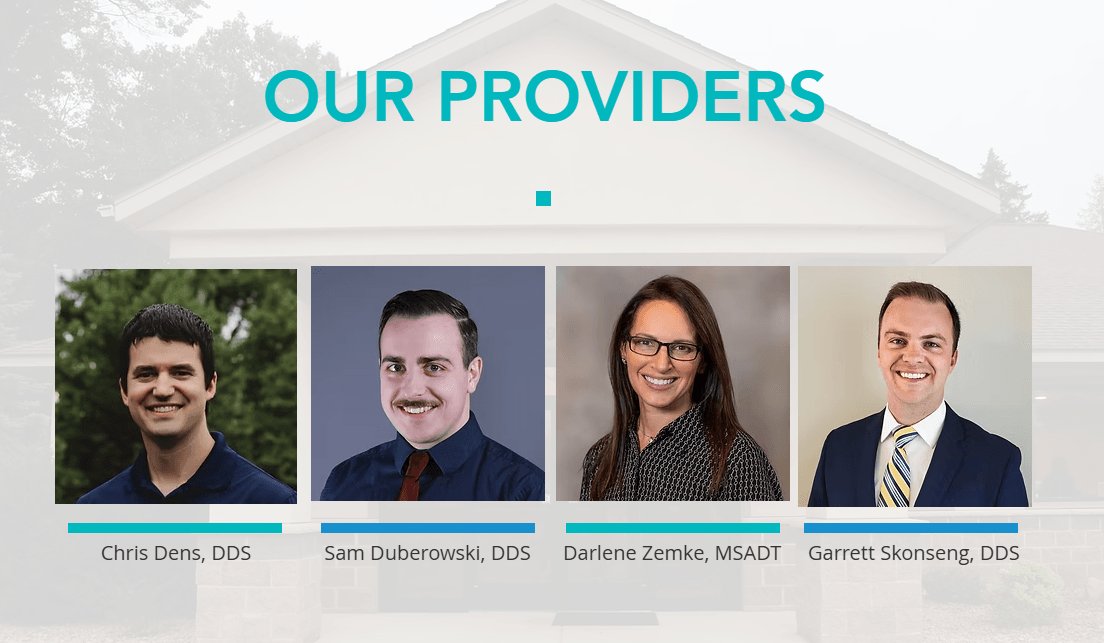
One simple thing they do differently is what he calls “handoffs.” At some clinics or hospitals, Chris said, “they just say, ‘Yep, go over here and talk to so-and-so and they’ll get you to the next step.’” At his practice, “we walk with you and we talk to the next person and say, ‘Yeah, this is John, we just finished up with this. Here’s Dr. Duberowski, he’s to take care of this next part of the thing.’”


“So it feels much more like flow and zen as you move between the different people that are going to help you on your dental journey,” he said. “That communication and the in-person transitions really makes it much more seamless for the patient experience to be awesome.”

Legacy, Awards, and What Really Matters

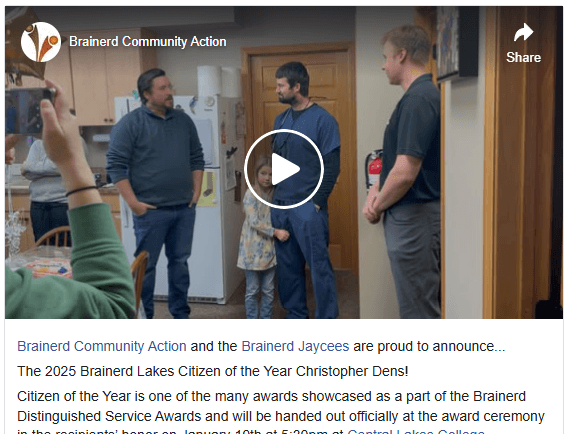
Chris, his dad, and his grandpa have all been named Citizen of the Year in Brainerd. It’s a big deal around here, but Chris’s focus is somewhere else.


“What did that moment mean inside your family?” he was asked.


“Pretty cool,” he said. “You know, my dad told me he was proud of me and honestly hearing that from my dad probably means more than this award does. Like, I’m not trying to belittle the award, but like, you know, every boy aspires to make his Daddy proud.”


Did seeing his dad honored like that shape how he thought about service? “Not really,” he said. “Because it’s not about the awards and honors and the recognition. Don’t get me wrong, it feels good. It made me smile. It gave me a good excuse to talk to people and, you know, be grateful. But the real heart of things is you do the things for the right reasons because it’s good in and of itself. Because people matter. Because improving lives is wonderful. Because getting rid of disease is great. Getting people out of pain is awesome. That’s the why. That’s the drive, is to do good.”


Looking ahead, he sees that work continuing to grow. “Every time I find something worth doing and I start doing it, people have seen it and come on board,” he said. “Some of the things that I thought would make a little difference, I’ve been able to make a huge difference because people in the community have shared that same mission and vision of goals of improving people’s lives or starting a waterski team or getting dental health access for the underserved.”


“So again, I’m hoping that things just continue to snowball in a good way and build on the momentum,” he added. “I was like, ‘Yeah, we’re gonna try and get to all the schools in the counties,’ and now I’m like, ‘Yeah, we’re gonna try and get to all the schools in the state.’ I never thought I’d be seeing that.”

What This Means for Us Out Here

For folks across central and rural Minnesota, Chris’s work is both a wake-up call and a game plan. The access problem isn’t just going to fade away. Long drives, long waits, and kids in pain are still common out here. But the school-based model proves communities don’t have to sit on their hands.


So here’s what you can do:


-- Parents: Ask your kid’s school if they’ve got a dental sealant or school-based dental program. If they don’t, check out the Minnesota Department of Health’s Oral Health Program and ask how to get one started: health.state.mn.us/people/oralhealth/programs/sealants.html.


-- Teachers and school staff: Reach out to local dental practices and hygienists about bringing preventive care into your school—even one day a month can make a real dent in untreated cavities.


-- Dentists, hygienists, and dental teams: Look into collaborative agreements and volunteer opportunities in your region. As Chris’s program shows, hygienists working at the top of their license in schools can help kids long before things turn into emergencies.


“At the end of the day, it’s not about the awards and honors and the recognition,” Chris said. “The real heart of things is you do the things for the right reasons because it’s good in and of itself. Because people matter.”

Lakes Area Buzz

© 2026 Lakes Area Buzz.

Lakes Area Buzz is your go-to source for everything happening around the beautiful Brainerd Lakes Area. From local news and community events to business highlights and outdoor adventures, we keep you connected to all the excitement in Brainerd, Baxter, Breezy Point, Crosslake, Crosby, Lake Shore, Nisswa, Pequot Lakes, and Pillager. Stay in the loop with the latest buzz in the Lakes Area!

© 2026 Lakes Area Buzz.