When Winter Became a Goldmine |
The Untold Story of How Brainerd Lakes Became Snowmobiling Royalty |
Ever wonder how a region went from economic desperation to becoming the "Official Snowmobile Capital of the World"?
The answer lies in three determined men working in a cramped garage, a devastating fire that could have ended everything, and one visionary real estate broker who saw opportunity where others saw abandoned railroad tracks.
This is the story of how Brainerd Lakes transformed frozen landscapes into economic engines—and how that legacy still powers our winters today. |
From Iron Range Collapse to Industry Rebellion |
Twenty miles from Brainerd, the twin towns of Crosby and Ironton faced extinction in the late 1950s. The Cuyuna Iron Range was dying. Post-war steel industry contraction meant layoffs, closed mines, and families leaving for opportunities elsewhere.
But Glen Gutzman, Dick Harrison, and Eugene "Stub" Harrison weren't ready to surrender. In a cramped Crosby garage, neighbors watched their windows glow late into frigid Minnesota nights. Some called them crazy. Others questioned their sanity.
They were building the future.
By 1961, Trail-A-Sled Manufacturing Company produced their first tracked prototype—crude fiberglass and plywood construction with a rudimentary track and 2x4 suspension. Nothing fancy. Nothing revolutionary.
Yet. |
The Breakthrough That Changed Everything |
In 1965, everything shifted.
The company, now marketing under the Scorpion brand, patented the first all-rubber track in the United States. This wasn't just an improvement—it transformed how snowmobiles performed. Machines could "float" over deep snow instead of fighting through it.
That year, Scorpion manufactured 500 machines featuring the new rubber track technology, fiberglass bodies, and 40-mph capability. Price tag? $795.
The nimble, stylish machines captured marketplace imagination and propelled the company into explosive growth.
But the best was yet to come. |

When Vice Presidents Come Calling |
January 1967 brought national attention.
A Trail-A-Sled plant manager set a world distance-jumping record of 66 feet 4 inches at Detroit Lakes. News reached Washington, D.C., and Vice President Hubert H. Humphrey issued a proclamation declaring Minnesota's Central Lakes area the "Official Snowmobile Capital of the World".
That same year, three Scorpion employees embarked on an audacious 28-day journey from Crosby to Anchorage, Alaska. The expedition proved the machines' durability under conditions that would destroy lesser equipment.
Sir Edmund Hillary—yes, that Edmund Hillary who conquered Mount Everest—subsequently selected Scorpion snowmobiles for his expeditions.
By 1967, the Scorpion plant in Crosby reached production peaks of 85 units per day with over 150 employees. For a community reeling from mining collapse just years earlier, this represented nothing short of economic resurrection. |
The Fire That Nearly Ended Everything |
Then catastrophe struck.
|

From Manufacturing to Recreation Mecca |
While Scorpion and Polaris dominated manufacturing through the 1960s and 70s, the industry experienced brutal consolidation by the 1980s. The 1973 OPEC oil embargo devastated sales. Over 100 snowmobile manufacturers dwindled to just four survivors: Polaris, Arctic Cat, Ski-Doo, and Yamaha.
When Arctic Cat shut down the Crosby Scorpion facility in 1981, it marked the end of an era.
But Brainerd Lakes wasn't finished evolving. |
The Visionary Who Saw Gold in Abandoned Rails |
In 1983, Burlington Northern Railroad abandoned its route from Brainerd to Bemidji. The 1893 railroad grade that had served as economic lifeblood for 16 communities sat empty, threatened by commercial development.
Terry McGaughey, a Pine River real estate broker, saw something different.
He envisioned a year-round recreational trail for bicyclists, hikers, and snowmobilers. Initial reception? Lukewarm at best. Some feared an influx of "hoodlums, bandits and outlaws".
McGaughey responded with data, not emotion.
He visited all 16 communities along the potential trail route with his policy to speak to "any group of one or more any time and any where". When some communities resisted, task force members worked locally to replace obstructive city council members with trail supporters.
By 1988, McGaughey organized an overnight fact-finding tour for key legislative leaders. Local resorts, vendors, and community members provided accommodations and testimonies. Legislators walked along railroad ties at the envisioned trail site.
The outreach succeeded. The 1988 Legislature authorized creation of the Paul Bunyan Trail. |
The Trail That Proved Everyone Wrong |
When the Paul Bunyan Trail officially opened for snowmobiling in winter 1992-93, something astonishing happened.
Counters placed along the trail recorded visitor numbers that exceeded everyone's expectations. The subsequent economic impact on bordering communities validated McGaughey's decade-long advocacy.
By 2014, the Paul Bunyan Trail reached its current 120 miles—the longest continuously paved rail-trail in America. The trail showcases area pine forests, passes along shorelines of 21 lakes, traverses scenic wetlands, and crosses bridges over four rivers.
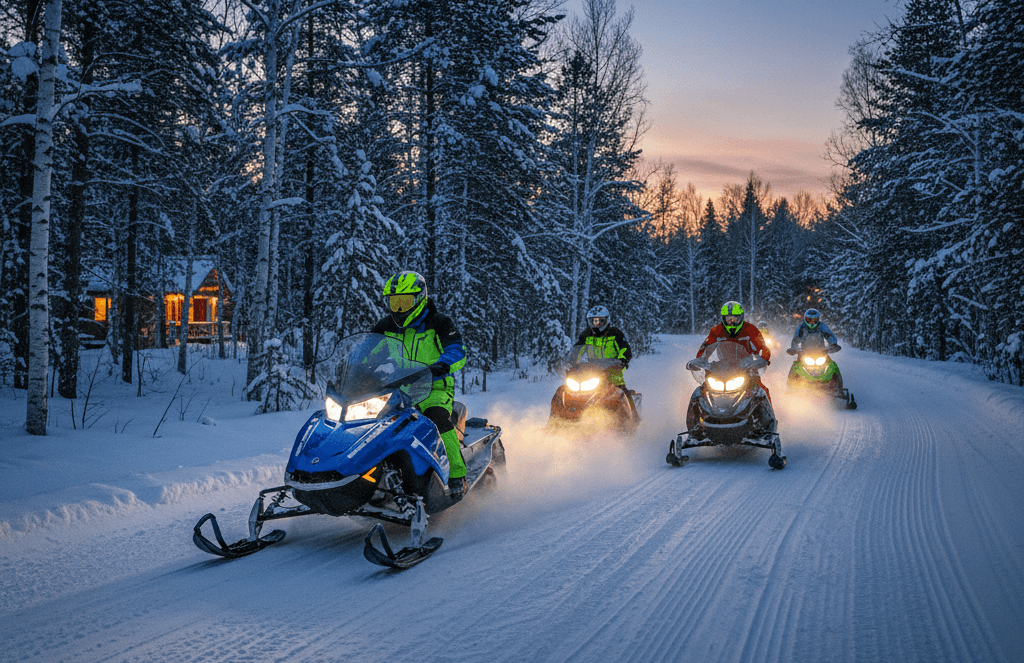
Today, Crow Wing County boasts approximately 1,000 miles of groomed trails maintained by 12 snowmobile clubs with roughly 700 volunteers.
And those volunteers? They're the unsung heroes keeping winter alive. |
The Volunteer Army You Never See |
How much is snowmobiling worth to our region?
A comprehensive 2004 study found that annual snowmobiling expenditures totaled $199.6 million statewide, supporting 2,718 jobs. State and local tax revenues from snowmobiling totaled $51.8 million.
For Brainerd Lakes specifically, snowmobiling represents critical winter economic activity. Our region attracts hundreds of sports enthusiasts annually to 1,000 miles of groomed trails radiating in every direction from Brainerd.
Snowmobilers support local economies through resort stays, restaurant dining, service station visits, and retail shopping. Many communities experience slower economic activity during winter months—snowmobile tourism provides essential revenue during this traditionally dormant season.
The famous Gull Lake Lighted Trail provides a distinctive attraction: a lighted path running the lake's entire length for spectacular nighttime riding. |

Preserving Heritage Through Celebration |
The Pequot Lakes Brush Pilots host the Annual Antique Snowmobile Rendezvous, now in its third decade. The three-day gathering includes shop sessions, trail rides, and races for 1966-and-older machines.
|
What's at Stake for Tomorrow |
Climate variability affects season length, snow depth, and trail quality. Minnesota snowmobile registrations declined from a 2001 peak of nearly 300,000 to approximately 216,000 by 2014.
|
Why This Legacy Matters Now More Than Ever |
The Brainerd Lakes snowmobiling story isn't just about machines or trails.
|
Your Turn to Write the Next Chapter |
- Experience 1,000 miles of groomed trails maintained by dedicated volunteers
|
0 Comments
Join the conversation
Be the first to comment
Share your thoughts above.